
When Curiosity Grows Twisted and Sick
A Meditation for Ignatius Day

Here’s the thesis: A conspiratorial mindset is a perversion of an otherwise good, holy and necessary virtue—namely, curiosity. How do we harness the spiritual potential of our inherently curious nature while avoiding the dark and dangerous tunnels of conspiracy, so rampant in both our communities and our souls?

On Curiosity
Curiosity sends us out, keeps us asking questions. We delve deeper into the mysteries of ourselves, one another, our world and our God. This is good. This is essential.
Curiosity keeps us humble; the mere act of asking a question requires a recognition that we do not yet know it all—and we need others to help us continue to grow.
Curiosity is a natural antidote to judgment. To paraphrase the wise words of Fr. Greg Boyle, SJ—Jesuit priest and founder of Homeboy Industries—it’s always better to stand in awe at the burdens another carries rather than judgment over how they carry them. Such a disposition births empathy, compassion and community.
Curiosity always leaves room for redemption. We turn with wonder toward one another, always seeking the good, the beautiful. We are not content with first impressions; we seek out the fullness of one another’s stories. Curiosity builds up community.
Today is the Feast of St. Ignatius of Loyola whose legacy challenges us to find God in all things. Such a spiritual quest demands curiosity. We venture out into the world wondering where God might show up next, how this moment right here, this detail right now, this exchange, conversation, encounter will reveal something new of God. We wonder—and we do so with humble expectation. God is here, but what might God be saying to me? How is God at work in you? What wondrous feat might the Spirit be planning through this cocktail of personalities, desires and dreams?
The Twisted Turn
Ignatius calls the devil “the enemy of our human nature.” This is illustrative. This title reminds us that those obstacles, habits, experiences and temptations that keep us from full flourishing are tricks of the enemy. It is in our nature to grow. God desires that we bloom; the enemy wants nothing more than to keep us stunted and alone.
What, then, of conspiracy?
A conspiratorial mindset is one masquerading as righteous curiosity, one that insists on simply asking questions. But here’s the only question that really matters—why?
Curiosity becomes perverted, sick and twisted when we seek not with a disposition of wonder, awe and compassion, but with one tainted by power, pride and entitlement.
A conspiratorial mindset asks questions assuming there is secret knowledge that will grant the questioner some great honor, ushering in wealth, authority, influence or secret opportunity.
A conspiratorial mindset assumes the worst in the world, insisting that others have been keeping all the answers to themselves and that the questioner deserves to know, deserves to have, deserves to benefit.
A conspiratorial mindset is one that collects details and hides them away only to be rationed out at opportune moments for the greatest personal benefit. Such a mindset does not serve the common good but the individual. The individual or the niche group is the greatest good, not the community.
A conspiratorial mindset has a clear physical shape and spiritual trajectory: It lords over rather than enjoys with.
Two Standards
We look out at the world today and insist we see such movements clearly. Oh—there’s the conspiracy! Found it. I personally only ask good questions.
Lovely for you.
But for most of us, we find ourselves wandering in the muddled mist of the spiritual life. Yes—there are clear examples in our world, but there are also hidden movements within our own inner lives, our relationships, our professional trajectories and so on.
St. Ignatius wisely writes that the enemy of our human nature desires to work in secret, in shadow. So, too, do conspiratorial mindsets. Curiosity sends us out, asks big questions in the light of day, never hiding from new information. Curiosity makes room for all. Not so with the conspiratorial mindset. Only carefully crafted narratives will do. Only certain people are worthy of such knowledge.
Curiosity blossoms from wonder; conspiracy is built upon fear.
So, then, where do we harbor our own conspiratorial instincts? Where does fear govern our questions, our meaning-making, our life trajectories?
Ignatius invites us to consider this: The enemy draws us into that camp of darkness and isolation using three key stepping-stones. We are tempted to inordinate riches, to insistent honors and then to bloated pride. We ultimately find ourselves alone and isolated.
When do we chase after knowledge, images, stories or affections that only serve our own immediate ends—financial or otherwise? Such knowledge—and access to it—makes us feel special (i.e. honored), and we can only feel special if others don’t. And where does that lead? Pride. Power. Prestige. We lord it over whomever we can find. We separate ourselves from the People of God.
True curiosity? That keeps us humble. And humility is the ultimate indicator of Christ’s camp, Ignatius tell us. We push against the desire for wealth; we accept the possibility of rejection. As Pope Leo XIV reminds us, we willingly embrace our very human nature; that is, we recognize that we are vulnerable, limited and finite. We can never know it all, have it all, be it all. And because we are limited, we necessarily need the companionship, wisdom and giftedness of others. That is how God has made us.
So of course, the enemy of our human nature insists otherwise, burrowing into our hearts a desire to know more than is ours to know—and to grow bitter when we realize that we are necessarily limited in our knowledge. Our relationships are then fractured; we find that we have inadvertently cast ourselves out and away from those who love us. Wasn’t that the root of the problem in the Garden of Eden?
The Grace We Seek
Curiosity is a holy and essential disposition for a healthy spiritual life. We will not grow without it. But it can become twisted if we are not mindful; it can lead us astray down a path that will only distract us from the good and beautiful things God is inviting us to discover.
And so, on this Feast of St. Ignatius of Loyola, let ask for the grace of a humble, curious spirit, willingly going out and into the world to share in and with the fullness of creation, always seeking after our God who draws us near and into community in the full light of day.
Speaking of the Feast of St. Ignatius…
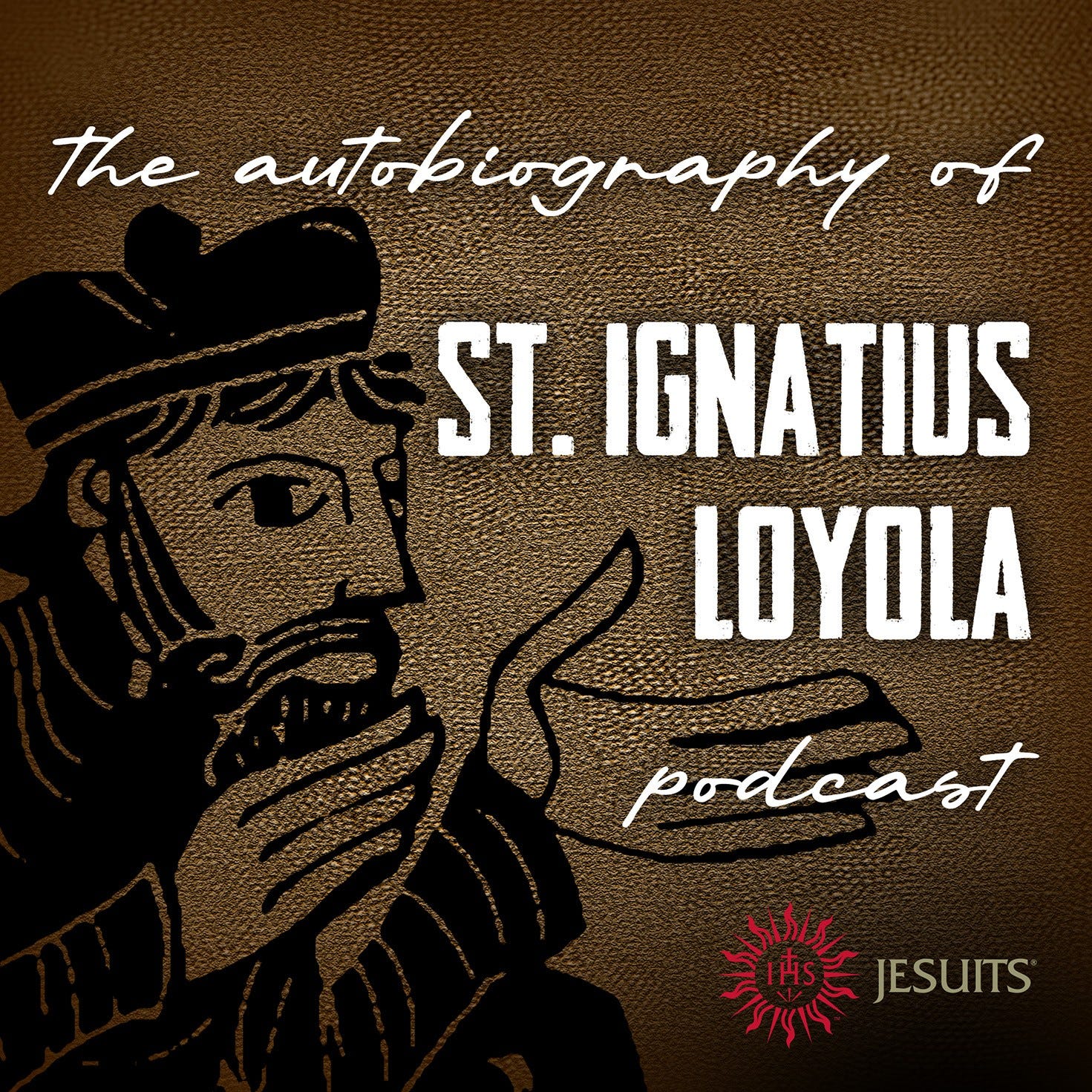
Check out our new podcast series over at the Jesuit Media Lab!
The one and only Fr. George Drance, SJ, provides the narration of the “Autobiography” and Jack Bentz SJ & Cameron Bellm offer reflections, insights and helpful analysis to make sense of St. Ignatius’ story today. Click here.
Thank you for the beautiful reminder. Writings from St Ignatius have revolutionized my walk with God in the last year.